

Ms. Lanni’s Bag of Tricks
October 12, 2018


We’ve all seen it: our child’s Montessori teacher gets them to do that  one thing that we cannot get them to do! It’s magic, right? Not really! You can do it, too!

Carolyn Lanni of our Primary division (children ages 3 to 6) recently shared these tips in her classroom newsletter. We think it’s parenting genius. Read on!


Communicating with this age group can be tricky! Here are some phrases we use in the classroom that you might find useful at home. I once had a parent say that every last penny spent at our school was worth it just for the phrase, “It’s not available.”


  • Ending questions with “…or not yet?” Examples: “Did you wash your hands or not yet?” “Did you flush or not yet?”

This curtails fibbing. If you just ask, “Did you wash your hands?” it’s very easy for the child to answer, “Yes” when they really mean, “No” or “I don’t know.”

  • “That’s not available right now.

Child: “I want some cookies for snack.” Adult: “Cookies are not available right now. Would you like pretzels or string cheese?

  • Offering choices in lieu of demands or arguing.

Child: “I don’t want to go.” Adult: “It’s time to go. Would you like to hold my hand or walk by yourself?” If the child does not choose, the adult chooses.

  • Repeating a question back to the child or asking what THEY think, instead of directly answering the question…particularly when they already know the answer!

Child: “What is that?” Child: “What’s on your shirt?” Adult: “What IS that?” Adult: “What do YOU see on my shirt?” Child: “A frog!” Child: “Buttons. And polka dots!” This helps a child depend on their own knowledge and intelligence and builds their language skills.

  • “Thank you for waiting. Now I’m looking at you.”

When a child interrupts a conversation you are having with someone else, you can hold up your index finger to indicate they need to wait just a minute. Then when you are finished with your conversation (don’t make them wait too long), you can look at them with a smile and say, “Thank you for waiting. Now I’m looking at you.” This teaches them the cues that someone is ready to talk to them, and it develops their patience.

  • Use one word and point.

Instead of: “Here are your boots. Put them on. We are late. We need to get in the car and leave right now. You need to listen the first time. I need you to be a role model for your sister.” Use one word and point: “Boots.” Using as few words as possible is particularly helpful for younger children. It’s captivating, less overwhelming, and gives them a simple command to follow.

  • “We”+ expectation…

Phrasing expectations in a positive way is more helpful because (a) it clearly tells children what to do (b) they are more likely to comply. Instead of, “Stop throwing your shoes,” say, “We wear shoes on our feet.” Instead of, “Stop running,” say, “We walk in the shopping mall.” Instead of, “Stop jumping on the couch,” say, “We sit on the couch.”

  • Be specific.

Instead of: “Clean up your dinner!” Try: “Pick up your plate.” Once the child does this, then, “Put your plate in the sink.” Walking the children through it step by step is helpful when a child is overwhelmed by a multi-step process.

By Teresa Pavelich June 10, 2026
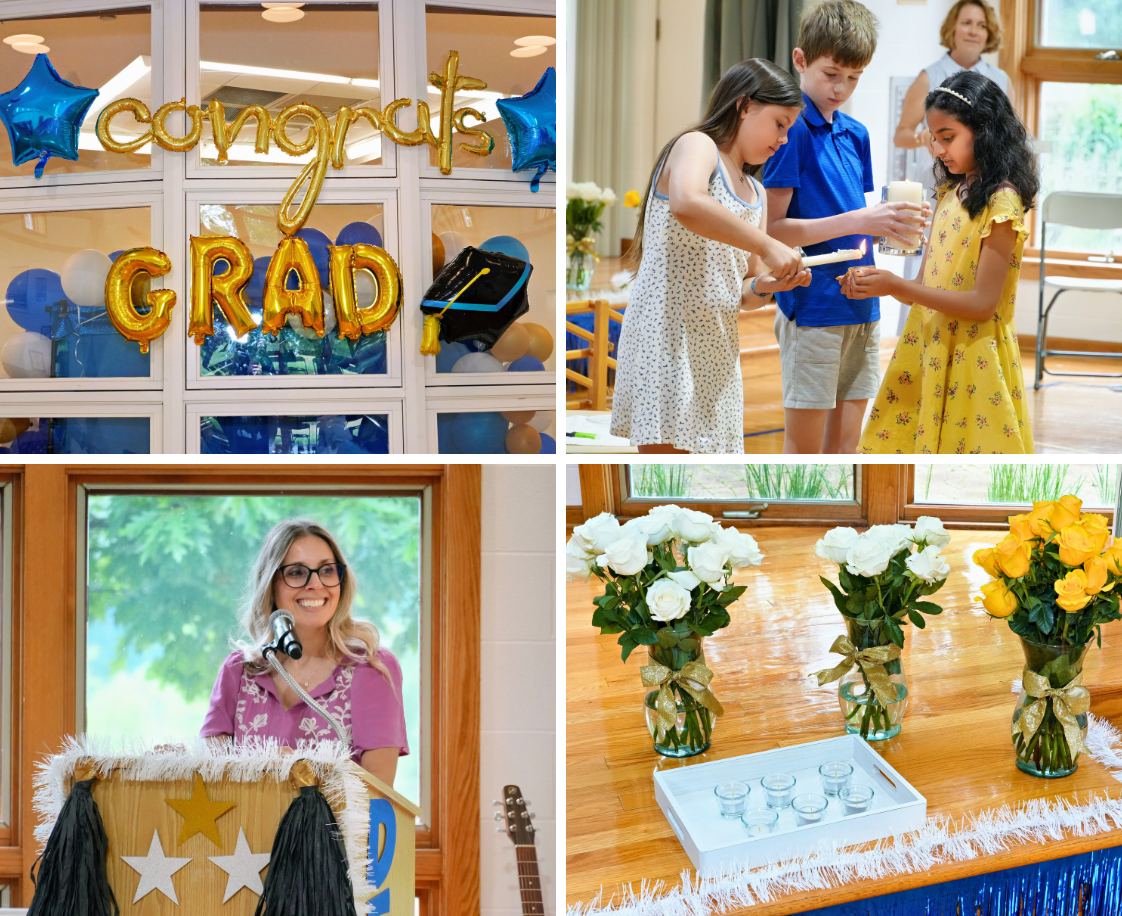
Hello everyone! Thank you for being here today to celebrate this year’s stepping up and graduating students. This day is always a bittersweet one as we celebrate all their accomplishments and all their hard work while also preparing to say good-bye as they join new classrooms and embrace new opportunities ahead. They’ve earned their key of knowledge, completed their Elementary cycle, and are graduating from the Adolescent Program and are moving on to high school. As hard as it is to say good-bye as these students step up or graduate, we do so with the confidence that they are better prepared for life having received the gift of a Montessori education. It’s been a true pleasure this past week watching key recipients receive their key of knowledge and wear it proudly for all to see. I have loved hearing all the speeches from our 3rd and 6th year stepping up students and our 8th year graduates as they share their fondest memories of MSLF and offer thanks to all those they are grateful to. I love hearing what memories they will take away from MSLF with them. Baking in their Primary classroom, building forts in Elementary, finding a turtle on a nature hike, learning to play the ukulele in music, visiting Nature’s Classroom with their classmates, performing in the school play, a research project they worked on with their friends, selling coffee at Friday Markets in AP. These are just a few of the memories shared by stepping up and graduating students over the years. These are all incredible memories to have from school and to be able to take with you. But what I’ve come to realize is these are really more than just memories. These are significant, impactful moments that will likely, in some way, shape our students’ lives. They may not know it yet. But 5, 10, 20 years from now, when these memories are reflected on and shared again, they will become part of each student's legacy—a collection of experiences, values, and lessons that help define who they are and how they move through the world. And just as important, they become part of MSLF’s legacy as well. Each graduating class leaves behind something meaningful: traditions, friendships and memories that become woven into the story of our school. The theatre student will remember the feeling of performing in their first school play. The entrepreneur will remember the excitement of planning for their first school market. The new parent will share their love of nature with their child as they remember nature hikes at MSLF. These memories are moments of self-discovery. Opportunities for our students to learn about themselves. Experiences that help guide their future. These memories will be their compass as they enter high school, college and beyond, guiding them towards a joyful life. And all those they thank are the ones who helped guide them towards that joy. Their teachers, their parents, their peers will have all impressed upon them knowledge and experiences that have helped them learn, problem solve, adapt and teach others, all of which are life skills that any of us need to succeed. They enter the world well prepared for what will come next thanks to the memories they have made here. And I hope to be here long enough to hear you share them again someday as you set out to do great things. So, Graduates, no matter where your compass guides you, I hope you will always remember MSLF as we will always remember you. YOU are our memories. YOU are part of our legacy. And YOU have helped shape our future, just as MSLF has helped shape yours. So, thank you!  Please join me in congratulating all our stepping up and graduating students today. Congratulations graduates!
By Teresa Pavelich October 21, 2025
From curiosity to self-control, Montessori aligns with the human tendencies that help children grow, adapt, and flourish.