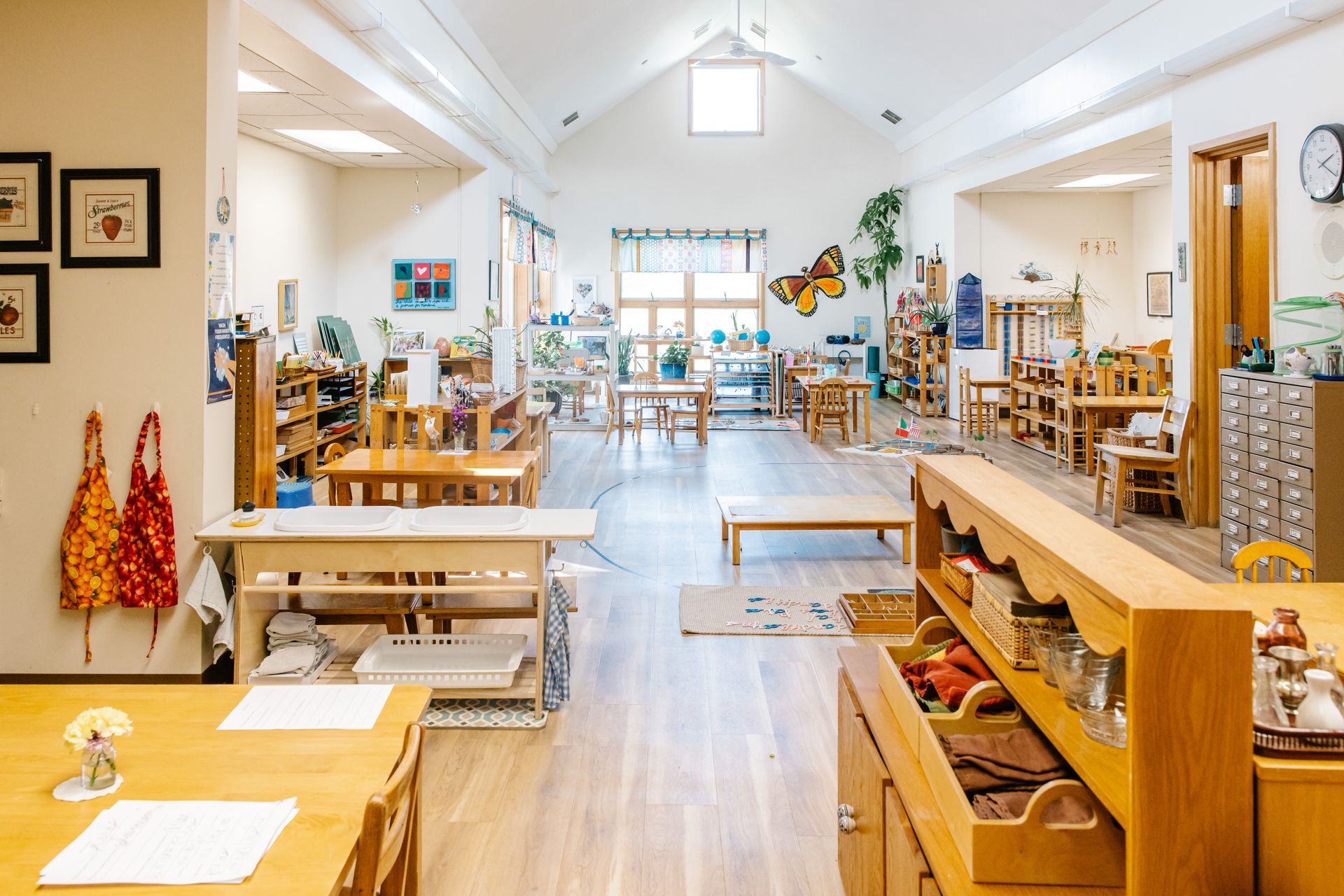


The Montessori approach can be intimidating at times. There are many misconceptions about Montessori but the methodology is backed by results.
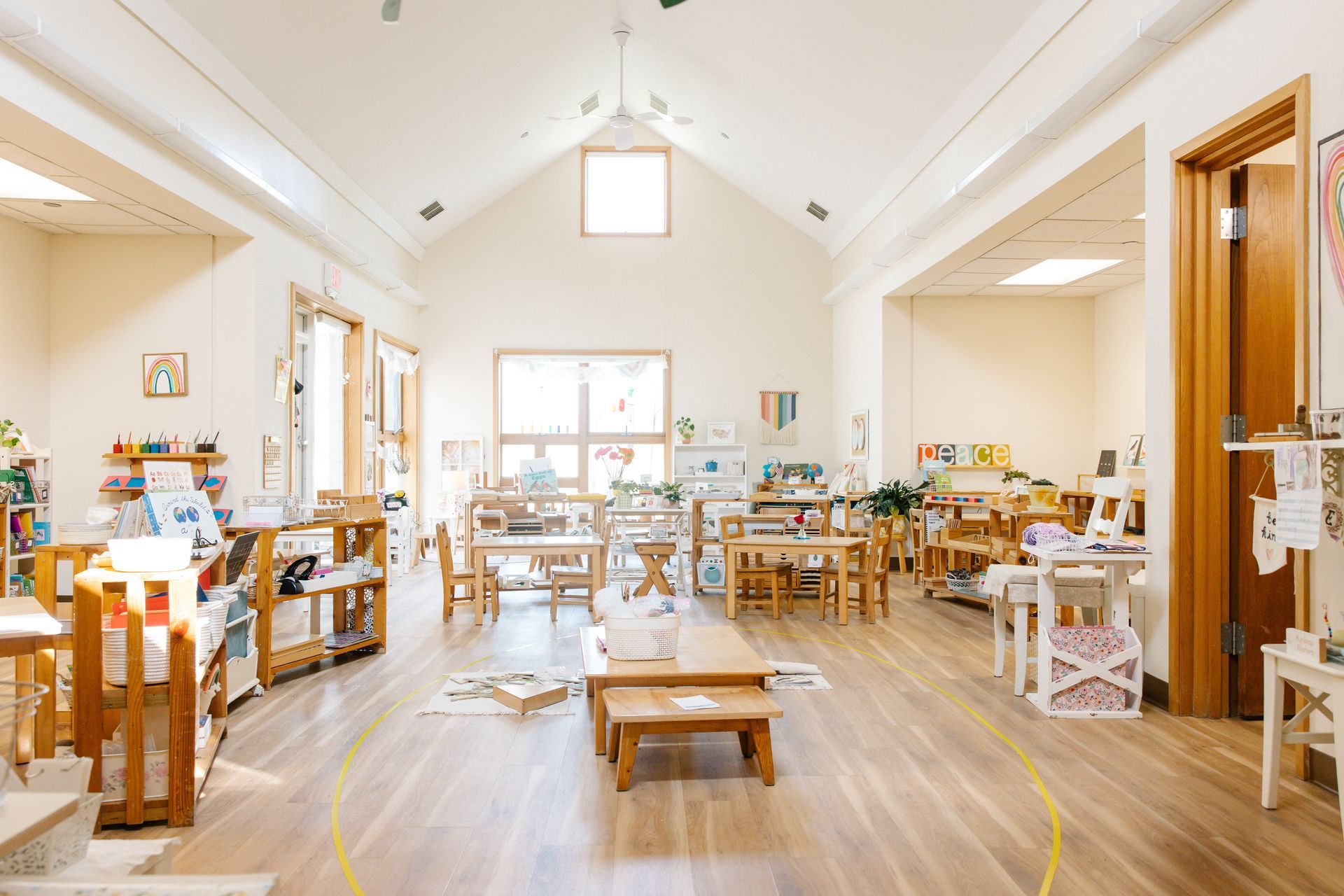
In Montessori, we focus on supporting children’s intellectual, emotional, social, and academic growth. A scientist first and foremost, Dr. Maria Montessori was interested in creating optimal learning environments so that young humans could reach their potential with as few adult-created obstacles as possible.
Thus, in Montessori, we think differently about the role of the adult and even how learning materials are used. One of the adults’ roles, for example, is to put children in touch with activities so that children can learn through doing. With this experiential approach, children can use their hands, engage through movement, and even make mistakes. The adults are not the dispenser of information or even the right answers. Rather, we help children learn how to learn, which includes understanding themselves as learners, figuring out how to use failure as a starting place for growth, and exploring the process as much as coming to an end product.
To achieve this, the Montessori method has a very intricate approach that relies on providing children with building blocks over the course of their educational journey. Montessori guides engage in an individualized, long-term process of introducing children to a series of skills and information, all to help children experience ah-ha moments. We know that when children discover something for themselves, they own that information deeply. Sometimes we’ve seen children feel like they are the first discoverers of a new piece of knowledge, a linguistic tool, or a mathematical trick.
For example, when children are learning the process of compound multiplication, we move them through a series of activities that connect their prior knowledge of place value, patterning they have experienced for years through different Montessori materials, and a color-coded system for quantities. As they work through steps that show how compound multiplication works, children often realize that they can take shortcuts rather than putting out and exchanging various colored bead bars on a material called the checkerboard. Once they start taking these “shortcuts” they are demonstrating that they have internalized the steps for multiplying multi-digit numbers. Sometimes in this process, children feel like they are discovering a fabulous secret or have invented a new mathematical method. However, we know that they are taking the necessary steps to abstractly compute the answer in a compound multiplication problem.
One of the gifts of a Montessori education is that children have the opportunity to discover so much in their own way and in their own time. Rather than rote learning or memorization, children are given the chance to make connections. Through multiple learning experiences, these connections become interconnections that create complex neural pathways that often show up later in life. There is a reason why a Wall Street Journal piece coined the term “Montessori Mafia” to refer to a number of former Montessori students who have gone on to become what could be called tech titans and engaged innovators!
If this process of discovery isn’t happening for some reason, Montessori guides are trained (and the materials are designed) to provide scaffolding so that children can still build upon prior knowledge and make progress toward mastery. Even so, sometimes extra support is needed and when this is the case, collaboration is key. Montessori works most effectively when there is a strong alignment between home and school. So, if a child needs some additional help or outside services, we work to coordinate with a tutor or support person so that everyone is working in alignment.
If you ever want to show your child a shortcut or introduce some outside-of-school practice, take a moment to check in with your child’s classroom teacher. It might just be that your child is on the brink of discovery. They could be at the culmination of years of carefully designed preparation. They might be just about to make an important connection or realize a significant insight. And when someone is on the edge of understanding, it is a tremendous gift to allow them to have their moment!
(If you are interested in learning more about what happens when children can discover the process for themselves, we’d love to show you! Schedule a tour to see how MSLF students own their knowledge in powerful and profound ways.)